
Tawaf: Meaning, Types and How to Perform It
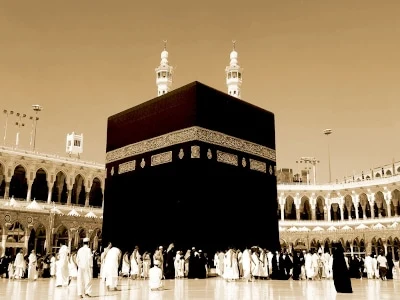
Tawaf is the ritual circumambulation of the Kaaba and one of the most significant acts of worship in Islam. The word "Tawaf" derives from the Arabic root meaning "to go around" or "to circle." Performing seven circuits around the Kaaba in a counter-clockwise direction, Tawaf is a pillar of both Umrah and Hajj. Understanding its types, conditions and etiquette enhances the spiritual depth of this sacred act.
Types of Tawaf
Islamic jurisprudence identifies several types of Tawaf, each associated with a specific occasion. Tawaf al-Qudum (arrival Tawaf) is performed upon first entering the Sacred Mosque for Hajj, equivalent to a greeting. Tawaf al-Ifadah (also called Tawaf al-Ziyarah) is performed on the 10th of Dhul Hijjah after leaving Mina and is an obligatory pillar of Hajj. Tawaf al-Wada (farewell Tawaf) is the final act before leaving Mecca.
Tawaf al-Umrah is the Tawaf performed as part of Umrah rites. Tawaf al-Nafl (voluntary Tawaf) can be performed at any time as an act of voluntary worship. Tawaf al-Nadhr is performed to fulfill a vow. Each type carries its own ruling: some are obligatory pillars (arkaan), some are mandatory duties (wajibaat) requiring a penalty if missed, and some are recommended (sunnah).
Conditions and prerequisites
Several conditions must be met for a valid Tawaf. Ritual purity (wudu) is required according to the majority of scholars, though the Hanafi school considers it mandatory but not a condition of validity. The entire body must be covered (awrah). Tawaf must begin from the Black Stone corner and proceed counter-clockwise. All seven circuits must be completed consecutively without extended interruption.
The Kaaba must always be to the pilgrim's left side during circumambulation. If this condition is violated during a circuit, that circuit must be repeated. Scholars agree that the Tawaf must take place within the boundaries of the Sacred Mosque, including the upper levels and the roof, which count as valid Tawaf areas.
Step-by-step guide
Begin at the Black Stone corner, facing the stone. Raise your right hand toward the stone and say Bismillah, Allahu Akbar. This gesture is called Istilam. Begin walking counter-clockwise, keeping the Kaaba to your left. During the first three circuits (for men only in Tawaf al-Qudum), hasten your pace slightly (raml). In all circuits, walk at a normal pace.
At each passing of the Black Stone, perform Istilam again. Between the Yemeni Corner and the Black Stone, recite the du'a: Rabbana atina fid-dunya hasanatan wa fil-akhirati hasanatan wa qina adhab an-nar (Our Lord, give us good in this world and good in the Hereafter, and protect us from the punishment of the Fire). There is no specific du'a mandated for other parts of the circuit; you may make any personal supplication.
Common mistakes to avoid
Many pilgrims make errors during Tawaf that can be easily avoided. Raising the voice excessively, pushing through crowds to reach the Black Stone, designating specific du'as for each circuit (no authentic evidence supports this), walking in the wrong direction, and neglecting wudu are common mistakes. Following a group leader reciting du'as loudly is not from the Sunnah; each pilgrim should make their own personal supplications.
After completing seven circuits, pray two rak'at behind Maqam Ibrahim if possible, or anywhere in the mosque. Drink from Zamzam water and proceed to Sa'i between Safa and Marwa if performing Umrah or Hajj.
Tawaf with Noussouki Travel
Our experienced guides at Noussouki Travel accompany pilgrims during Tawaf, ensuring the correct performance of each step. We advise on optimal timing to avoid peak crowds, help identify the Black Stone marker on the floor for alignment, and assist with the du'as. Contact our team to plan your pilgrimage with confidence.