
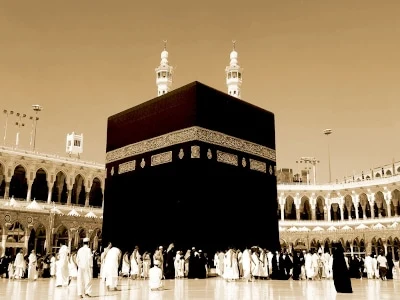
The Black Stone at the Kaaba: Symbol of Faith and History
The Black Stone (al-Hajar al-Aswad) is one of the most revered objects in Islam, set into the eastern corner of the Kaaba in the Sacred Mosque of Mecca. For over 1,400 years, millions of pilgrims have sought to touch or kiss this sacred stone during their Tawaf, following the Sunnah of the Prophet Muhammad (peace and blessings be upon him). Understanding its history, significance and associated rituals enriches the spiritual experience of every pilgrim.
Origins and divine descent
According to Islamic tradition, the Black Stone descended from Paradise. The Prophet (peace and blessings be upon him) said: The Black Stone descended from Paradise whiter than milk, but the sins of the sons of Adam turned it black (reported by al-Tirmidhi). Many scholars interpret this as a metaphorical teaching about the impact of human transgression on divine gifts, while others understand it literally as a miracle from Allah.
The stone is believed to have been placed in its current position by Prophet Ibrahim (Abraham) and his son Ismail when they built the Kaaba. It serves as the starting and ending point of each circuit during Tawaf, marking the boundary of the seven circumambulations that pilgrims perform around the House of Allah.
Physical description
The Black Stone is currently fragmented into several pieces held together by a silver frame. Its visible surface measures approximately 20 centimeters in diameter. The stone appears dark reddish-brown with slight variations in color and texture. Throughout history, the stone has been damaged by various events, including the Qarmatian attack in 930 CE when it was stolen and kept for 22 years before being returned to Mecca.
In recent years, the General Presidency for the Affairs of the Two Holy Mosques has released high-resolution images of the Black Stone, allowing Muslims worldwide to appreciate its details for the first time. These images reveal a polished surface with visible fragments bonded together, encased in the iconic silver mounting.
The ritual of Istilam
Istilam refers to the act of touching, kissing, or gesturing toward the Black Stone during Tawaf. The Prophet Muhammad (peace and blessings be upon him) kissed the Black Stone during his Hajj, establishing the preferred practice. Umar ibn al-Khattab famously addressed the stone saying: I know that you are a stone that neither benefits nor harms. Had I not seen the Prophet kiss you, I would not have kissed you.
When the crowds make it impossible to reach the stone, pilgrims may simply point toward it with their right hand and say Allahu Akbar at the beginning of each circuit. This gesture carries the same spiritual reward as physical contact. The scholars unanimously agree that causing harm to oneself or others in the attempt to reach the stone is not permissible.
Spiritual significance
The Black Stone holds deep spiritual meaning beyond its physical presence. It represents the covenant between Allah and humanity, as described in the verse of Surah Al-A'raf (7:172): Am I not your Lord? Some scholars link the stone to this primordial covenant, viewing it as a witness to humanity's pledge of worship.
On the Day of Judgment, the Black Stone will testify in favor of those who touched it with sincerity. The Prophet (peace and blessings be upon him) said: By Allah, on the Day of Resurrection, Allah will present it with two eyes with which it will see and a tongue with which it will speak, and it will testify in favor of those who touched it in sincerity (reported by al-Tirmidhi and Ibn Majah).
Visiting the Black Stone with Noussouki Travel
At Noussouki Travel, our experienced guides help pilgrims from Canada approach the Black Stone at optimal times when crowds are manageable, typically during late-night hours or early morning. Our team provides detailed briefings on proper etiquette, ensuring that your encounter with this sacred relic is both spiritually meaningful and physically safe. Whether you are performing Umrah or Hajj, the moment of facing the Black Stone remains one of the most profound memories of the pilgrimage.